Cursing at Ox-Carts: The Ancient Psychology Behind Your Morning Commute
Cursing at Ox-Carts: The Ancient Psychology Behind Your Morning Commute
Somewhere on the 405 Freeway in Los Angeles right now, a person is white-knuckling their steering wheel because someone merged without signaling. They believe, on some level, that this was personal. They are wrong — but they cannot help it. Neither could the Roman charioteer who lost his mind at a slow-moving grain wagon blocking the Via Sacra in 45 BC. The emotional machinery is identical. Only the vehicle has changed.
This is not a metaphor. It is a claim about cognitive architecture — one that the historical record supports with remarkable consistency, and that modern traffic psychology, largely built on simulator studies run with undergraduate volunteers, has only partially mapped.
Caesar's Edict and the Problem It Couldn't Solve
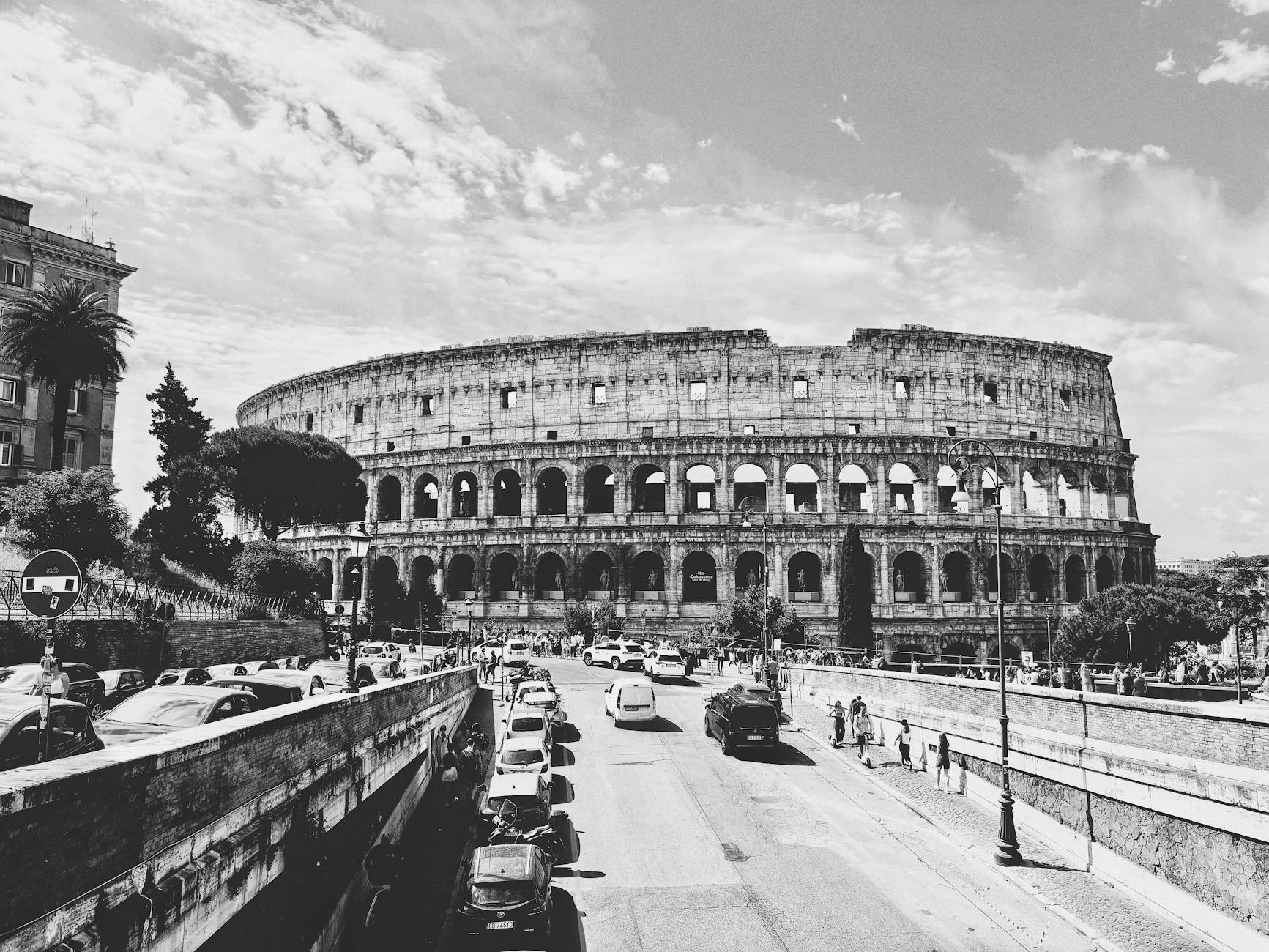
In 45 BC, Julius Caesar issued the Lex Iulia Municipalis, a sweeping piece of urban legislation that, among other things, prohibited most wheeled vehicles from operating within Rome between sunrise and the tenth hour of the day. The law was a direct response to a city in gridlock. Roman streets were narrow, unplanned, and shared by pedestrians, merchants, litters, and carts hauling everything from marble slabs to wine amphorae. The noise and the congestion were, by multiple contemporary accounts, maddening.
What is instructive is not merely that the law existed, but why it failed to resolve anything. Night deliveries created a new problem: Romans couldn't sleep. Juvenal, writing roughly a century later, complained bitterly that the racket of nocturnal carts made rest impossible in the city. The frustration had not been eliminated. It had been rescheduled.
This is a pattern any transportation planner will recognize. Congestion pricing, lane expansions, alternate-side parking rules — the specific intervention changes, but the underlying dynamic does not. Human beings experience movement as a proxy for agency. When movement is blocked, the psychological response is not merely inconvenience. It registers as a threat.
The Territorial Brain on Wheels
Psychologists studying road rage in contemporary settings have converged on a concept called territorial behavior extension — the tendency of drivers to treat their vehicles as personal space, subject to the same defensive instincts that govern physical territory. Cut someone off in a parking lot and they react as though you have walked into their home uninvited. The car, in this framework, is not a tool. It is a boundary.
What the simulator studies cannot easily replicate is the cumulative social context that historical records preserve. Medieval European cities produced a surprisingly rich archive of traffic-related conflict. London's municipal records from the 13th and 14th centuries contain repeated ordinances against reckless riding, unlicensed cart operators, and the obstruction of thoroughfares — along with documented disputes that escalated into physical altercations. A 1285 London ordinance specifically addressed horsemen who rode at speed through crowded markets, endangering pedestrians. The language used in contemporary complaints about these riders maps closely onto what behavioral researchers now call attribution of intent: the wronged party consistently describes the offending rider not as careless, but as deliberately hostile.
That attribution — he did this to me on purpose — is the cognitive shortcut at the center of most traffic rage incidents, ancient and modern. It is almost never accurate. It is almost always felt.
What the Papyrus and the Dashboard Camera Agree On
The historical record adds a dimension that laboratory research structurally cannot: it shows us how these behaviors scale across wildly different material conditions. A Roman citizen navigating the Forum, a medieval merchant navigating Cheapside, and a commuter navigating a Southern California interchange share almost nothing in terms of technology, infrastructure, or social organization. They share, apparently, the same emotional response to being slowed down by someone else.
Ancient Egyptian texts from Thebes describe disputes over right-of-way on the Nile, where boat traffic created its own version of the merge conflict. Closer to home, early American city records — Boston in the 1700s, Philadelphia in the early 1800s — are peppered with complaints about reckless carriage drivers and the danger they posed to foot traffic. The recurring theme is not just danger, but disrespect. The complaint is rarely that vehicle nearly struck me. It is that driver did not see me as worth avoiding.
This is the psychological core that links the ox-cart and the SUV: the interpretation of another person's movement as a statement about your status.
The Limits of the Simulator
Modern road rage research has produced genuinely useful findings. Studies have identified correlations between displaced aggression, anonymity, and driving behavior. Researchers have documented how certain vehicle types — larger, more expensive, with higher perceived status — are associated with more aggressive driving patterns. These are real contributions.
But the experimental design has a ceiling. You cannot simulate two thousand years of accumulated social context in a lab in Ohio. You cannot capture the way that traffic frustration interacts with economic stress, political instability, or urban density across centuries of variation. The historical record can. It already has.
The Roman evidence alone spans several centuries of urban traffic complaints, legislative responses, and documented failures of those responses. That is a longitudinal dataset no IRB-approved study will ever match. The question is whether behavioral scientists are reading it.
The Frustration Is the Constant
There is a temptation, when examining historical parallels to modern behavior, to reach for a comforting conclusion: we have always been this way, and we turned out fine. That is not the argument here. Road rage causes deaths. The frustration response that made it adaptive on the ancestral savanna is poorly calibrated for a six-lane interchange at rush hour.
But the historical consistency of the phenomenon does tell us something important about where to focus intervention. If the same cognitive pattern has reproduced itself across radically different transportation technologies for at least two millennia, the problem is not the car. It is not the road design, though design matters. It is the architecture of a mind that experiences blocked movement as personal threat and assigns hostile intent to strangers who are, almost without exception, simply trying to get somewhere.
Caesar could not legislate that away. Forty-five BC proved it. The question worth asking is whether we have a more useful tool than he did — or whether we are still, in our own way, just rescheduling the noise to the night hours and calling it a solution.