The Merchant Who Lived Through the Black Death Described Your 2020 Neighbors Perfectly
The Merchant Who Lived Through the Black Death Described Your 2020 Neighbors Perfectly
By Dr. Sonja Vreeland | Annals of Behavior
In the spring of 2020, behavioral scientists scrambled to understand why people were behaving the way they were. Why were some individuals stockpiling goods while others refused to acknowledge any threat at all? Why did conspiracy theories about deliberate contamination spread faster than public health guidance? Why were healthcare workers simultaneously celebrated and socially ostracized?
The researchers asking these questions had access to two sources of data: controlled experiments, largely conducted on undergraduate students sitting in university labs, and the unfolding real-time record of human civilization. The latter source is considerably larger. It stretches back roughly five thousand years. And somewhere in that archive, a Florentine merchant named Gregorio Dati had already written down the answers.
Who Was Gregorio Dati?
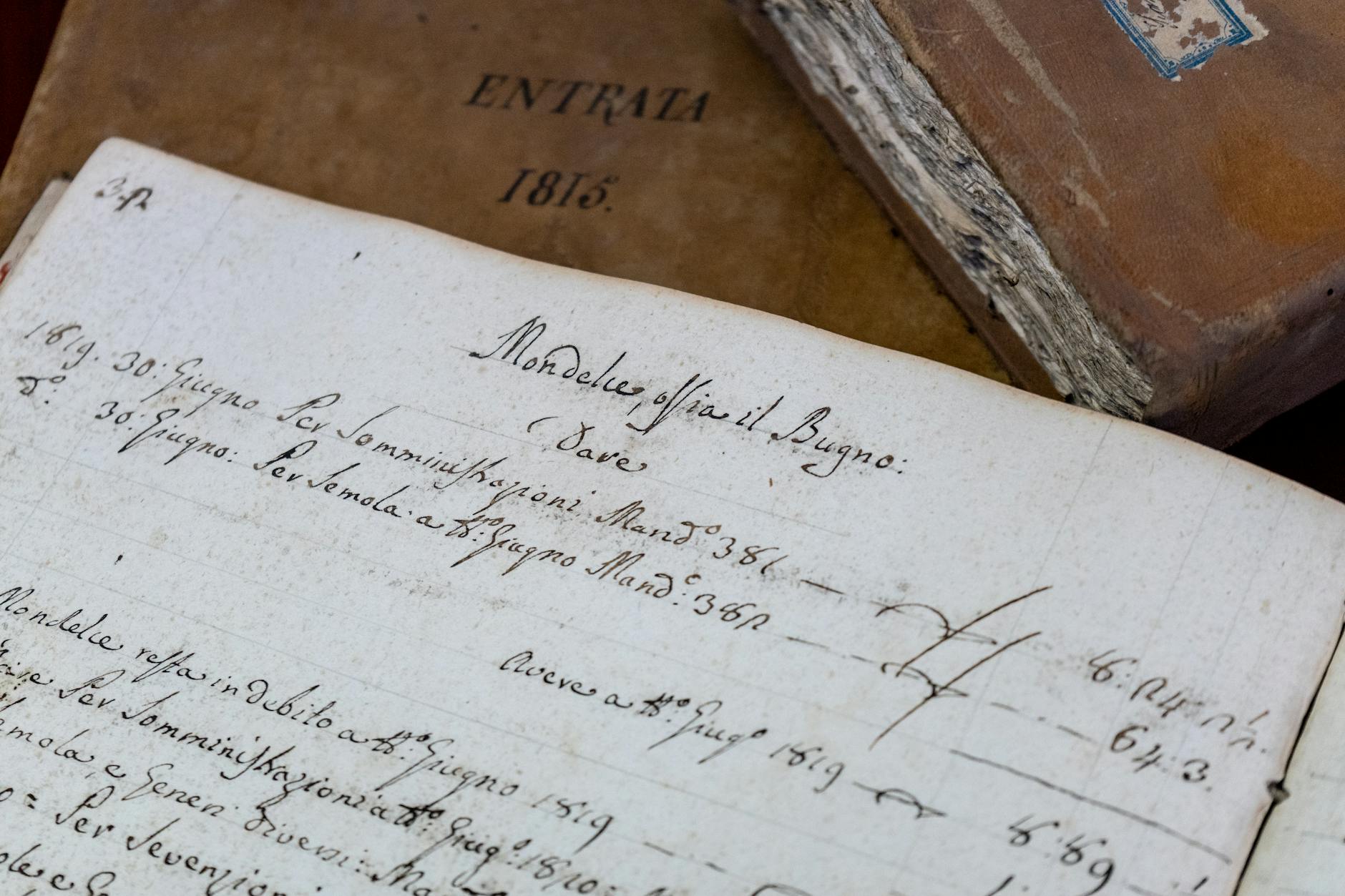
Dati was a prosperous cloth merchant operating in Florence during the late 14th and early 15th centuries. He was not a physician, a philosopher, or a chronicler by profession. He was a businessman who kept a private journal — the Libro Segreto, or Secret Book — primarily to track his finances, marriages, and personal obligations. What makes this document extraordinary is not its literary ambition but its ordinariness. Dati was a careful, observant man recording what he saw around him without any apparent intention of instructing posterity.
He was also living through one of the recurring waves of bubonic plague that continued to devastate European cities long after the catastrophic initial outbreak of 1347–1351. His journal entries from plague years describe a world that any American who lived through 2020 will recognize immediately — not in its medical particulars, but in its psychology.
Denial as a Social Strategy
Dati's entries reveal a population that did not simply lack information about the plague. Many of his contemporaries possessed adequate information and chose, in a recognizable way, to discount it. Merchants continued traveling between cities known to be infected. Wealthy families delayed leaving for the countryside — a recognized protective measure — because departure felt like an admission of danger that social norms discouraged.
This is not ignorance. It is motivated reasoning, a cognitive process that psychologists have documented extensively in laboratory settings and that the historical record illustrates across every culture and every epidemic for which written accounts survive. During COVID-19, researchers at the University of Southern California and elsewhere documented the same pattern: individuals who intellectually understood transmission risks nonetheless attended gatherings, removed masks in crowded spaces, and systematically underestimated their own probability of infection relative to strangers. The mechanism Dati observed in his neighbors — the social cost of appearing afraid outweighing the biological cost of exposure — operated identically in American suburbs six centuries later.
The Banquet That Wouldn't Be Cancelled
Perhaps the most striking passage in Dati's journal concerns the continuation of large social gatherings during active plague periods. Weddings, guild feasts, and religious celebrations were postponed reluctantly, resumed prematurely, and justified with a consistent logic: that the particular occasion was too important, too long-planned, or too spiritually significant to abandon.
The behavioral literature on this phenomenon is substantial. People apply different risk calculations to events they are emotionally invested in than to abstract future scenarios. A wedding or a holiday carries psychological weight that a statistical infection probability cannot easily counterbalance. In the fall of 2020, the Centers for Disease Control and Prevention documented a measurable spike in COVID-19 cases following Thanksgiving gatherings — gatherings that occurred despite explicit public health guidance, despite genuine awareness of the risks, and despite the fact that many participants had every intention of being cautious. The intention and the behavior diverged, exactly as Dati's journal suggests they did when a Florentine guild decided its feast day could not reasonably be postponed another year.
Poisoned Wells and Deliberate Spreaders
The Black Death generated one of history's most lethal conspiracy theories: the accusation that Jewish communities had poisoned wells to cause the epidemic. This belief spread rapidly across Western Europe and preceded massacres in dozens of cities. Dati's Florence was not immune to conspiratorial thinking, though the specific targets and accusations varied by location and moment.
The underlying psychological architecture of this response is well understood. When people experience a threat that is invisible, statistically complex, and unevenly distributed — meaning some people get sick and others do not, apparently at random — the mind searches for an intentional agent. Random suffering is psychologically harder to process than deliberate malice, because malice implies a comprehensible actor who can, in theory, be identified and stopped. In 2020, this same cognitive tendency produced a range of American conspiracy theories: that the virus was engineered and released deliberately, that hospitals were falsifying death counts, that specific groups were intentionally spreading infection. The content differed from the 14th century. The structure of the belief, and the psychological need it served, did not.
The Exhaustion of Those Who Stayed
Dati's journal also records something that receives less attention than denial or conspiracy: the grinding psychological deterioration of people who did not flee and did not pretend. Physicians, apothecaries, gravediggers, and clergy who continued working during plague outbreaks appear in various contemporary accounts as figures who became progressively numbed, erratic, or despairing — not cowardly, but worn through.
American healthcare workers in 2020 and 2021 described experiences that fit this portrait closely. Surveys conducted by the American Medical Association and the American Nurses Foundation documented elevated rates of burnout, moral injury, and post-traumatic stress symptoms among frontline workers — particularly those who had worked through multiple COVID surges. The specific clinical vocabulary is modern. The phenomenon of competent, committed people being gradually hollowed out by sustained crisis exposure is not.
What Five Thousand Years of Data Suggests
The value of Dati's journal is not that it tells us something we could not learn from a psychology experiment. It is that it confirms, across an entirely different population, culture, era, and pathogen, that the experimental findings are not artifacts of the laboratory. The college sophomore who underestimates his infection risk in a 2021 study is exhibiting the same cognitive pattern as the Florentine merchant who attended a guild dinner in a plague year. The consistency is the finding.
Pandemic psychology — the specific cluster of responses that includes denial, social norm prioritization, conspiratorial attribution, and caregiver collapse — appears to be a stable feature of the human mind rather than a product of any particular cultural moment. This is, depending on one's perspective, either deeply humbling or deeply useful. It is humbling because it suggests that five centuries of scientific and social progress have not fundamentally altered how we respond to invisible biological threats. It is useful because it means we do not have to be surprised. The next outbreak will produce the same behaviors. The question is whether knowing that in advance changes anything.
Dati, for his part, survived multiple plague years and died in 1435 at approximately seventy years of age, which was a considerable achievement. He left behind a journal that was not written for us but turns out to have been about us all along.