They Were Burning Down Constantinople Over a Chariot Race: On Sports Tribalism, Fan Rage, and the Ancient Need to Belong
The Nika Riots Were a Sports Story
In January of 532 AD, Constantinople was on fire. The Hippodrome — the city's great chariot-racing venue, capable of holding perhaps a hundred thousand spectators — had become the staging ground for an insurrection that would, over the course of a week, destroy much of the city and kill somewhere between thirty and fifty thousand people. The Emperor Justinian came within hours of abandoning his throne and fleeing by sea. His wife, the Empress Theodora, reportedly talked him out of it.
The proximate cause of this catastrophe was a chariot race.
More precisely, it was the accumulated tension between the Blues and the Greens — the two dominant racing factions of Byzantine Constantinople — which had been building for years through cycles of rivalry, street violence, and political manipulation until it detonated in the Hippodrome and consumed a city. The scale of the destruction is staggering by any measure. The psychological mechanism that produced it is not, on reflection, particularly difficult to recognize.
Anyone who has watched a city's streets fill after a championship win, or watched those same streets erupt after a controversial call, is looking at the same mechanism. The technology of spectacle has changed. The wiring underneath it has not.
What the Factions Actually Were
The Blues and Greens were not simply fan clubs in any casual sense. They were organized social institutions with their own hierarchies, their own territories within the city, their own political affiliations, and their own capacity for collective action that extended well beyond the Hippodrome's walls. Members wore their faction's colors as a signal of identity and allegiance. Rival faction members were, depending on the period and the political climate, competitors, enemies, or targets.
Social historians have debated for decades whether the factions were primarily sporting organizations, political movements, or something else entirely. The debate somewhat misses the point. They were all of these things simultaneously because the categories were not, for the people living inside them, meaningfully distinct. Supporting the Blues was not a hobby. It was a component of identity — one that organized social relationships, determined who you trusted, and defined who you opposed.
This is not a Byzantine peculiarity. The Roman circus and amphitheater generated comparable organizational structures and comparable intensities of feeling. Pompeii's excavations have produced graffiti that would not look out of place on a modern sports message board — boasts, insults, predictions, and expressions of devotion to specific gladiators or teams that communicate, across two thousand years, an emotional register entirely familiar to anyone who has checked social media during a playoff run.
The Psychology Behind the Colors
What drives this intensity? Decades of research in social psychology — most of it, admittedly, conducted on American college students in laboratory settings — has produced a fairly consistent account of the mechanisms involved. Henri Tajfel's social identity theory, developed in the 1970s, proposed that people derive a meaningful portion of their self-concept from membership in groups, and that this group identity motivates behavior in ways that are often disproportionate to any material interest at stake.
The historical record suggests that Tajfel was describing something very old. The Blues and Greens were not fighting over anything that could be rationally quantified. A chariot race has no monetary payoff for spectators. Victory confers no direct material benefit. What it confers is something more powerful and more durable: the affirmation of group identity, the collective experience of triumph, and — when the other team wins — the collective experience of humiliation that demands a response.
The Roman Senate understood this well enough to legislate around it. Senatorial decrees suspending gladiatorial games or restricting amphitheater attendance in specific cities appear in the historical record as administrative responses to crowd violence — which is to say, Roman governance had a bureaucratic category for sports-related public disorder. The category existed because the disorder was recurring and predictable. It was not treated as aberrant. It was treated as a known feature of organized spectacle that required management.
From the Colosseum to the Sports Bar
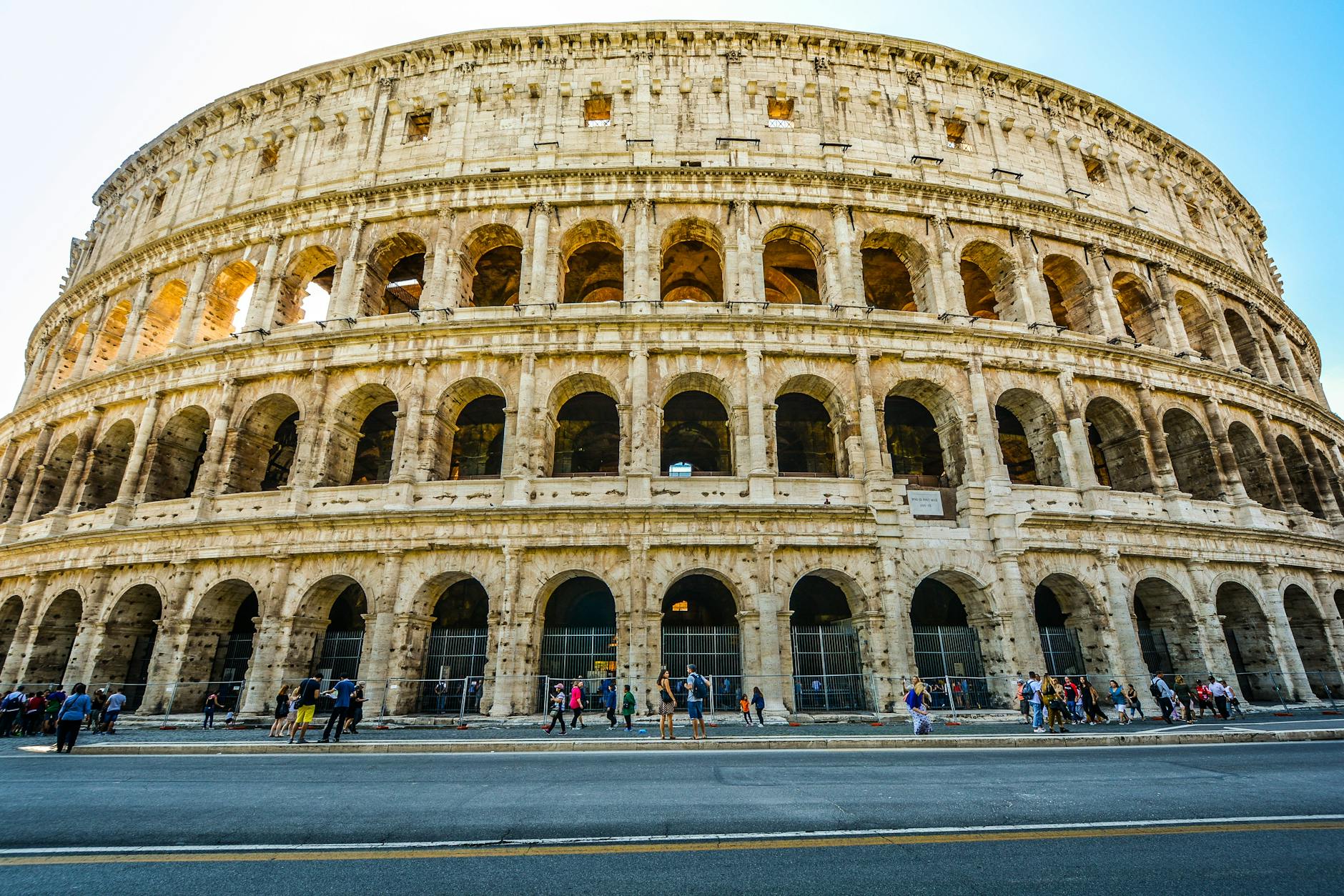
The continuity between ancient spectator culture and its modern American equivalent is not merely metaphorical. The structural similarities are precise enough to be instructive. Both involve large groups of people with no personal connection to the competitors investing enormous emotional energy in outcomes they cannot influence. Both generate intense in-group solidarity and equally intense out-group hostility. Both produce behaviors — face paint, chanting, ritualized displays of affiliation — that would seem bizarre in other social contexts and are entirely normalized within the spectator environment.
The Super Bowl generates more sports-related emergency room visits than any other single day on the American calendar. This is, depending on your perspective, either a damning commentary on contemporary culture or a data point that fits neatly into a two-thousand-year trend line. Roman physicians presumably had a comparable awareness of which days to expect a busy practice.
The specific cultural forms are different. The Romans did not tailgate, and the Byzantine Blues did not paint their faces, at least not in ways the historical record has preserved. But the underlying social function — the use of competitive spectacle as a vehicle for group identity, community formation, and the controlled (or sometimes uncontrolled) expression of collective emotion — is identical.
Why It Persists
Organized competitive spectacle keeps generating these responses because it is, in a meaningful sense, designed to generate them. The structural features of sport — clear sides, definitive outcomes, public stakes, repeated encounters — are precisely the conditions under which group identity psychology activates most powerfully. You do not need to be a Blues partisan to feel the pull. You need only to be human and to have chosen a side.
The persistence of sports tribalism across cultures and millennia is not a failure of rationality or a symptom of social dysfunction, though it can produce both. It is an expression of a psychological need — for belonging, for shared meaning, for the experience of collective identity — that human beings have always had and that organized competition has always been exceptionally good at satisfying.
Justinian rebuilt Constantinople after the Nika Riots. He constructed the Hagia Sophia on the ruins left by the fires, an act of architectural assertion that is remembered as one of the great achievements of Byzantine civilization. The Hippodrome kept running. The Blues and the Greens kept racing. The crowds kept filling the stands.
The need to belong to something, to cheer for something, to despise the other side with a passion that feels, in the moment, entirely proportionate — that need was not extinguished by the worst disaster it had ever produced. It was, within a generation, producing the same behaviors in the same venue. The crowd, as the historical record consistently demonstrates, was always this loud. It will remain so.