The Oldest Panic in the World: Why Adults Have Always Believed Young People Are the End of Everything
The Oldest Panic in the World: Why Adults Have Always Believed Young People Are the End of Everything
In the early 1950s, the United States Senate convened hearings on the corrupting influence of comic books on American youth. Fredric Wertham, a psychiatrist, testified that the imagery in publications like Tales from the Crypt was producing a generation of delinquents. Parents were terrified. Legislation was threatened. The comic book industry, facing existential pressure, created a self-censorship body — the Comics Code Authority — that would govern the medium for decades.
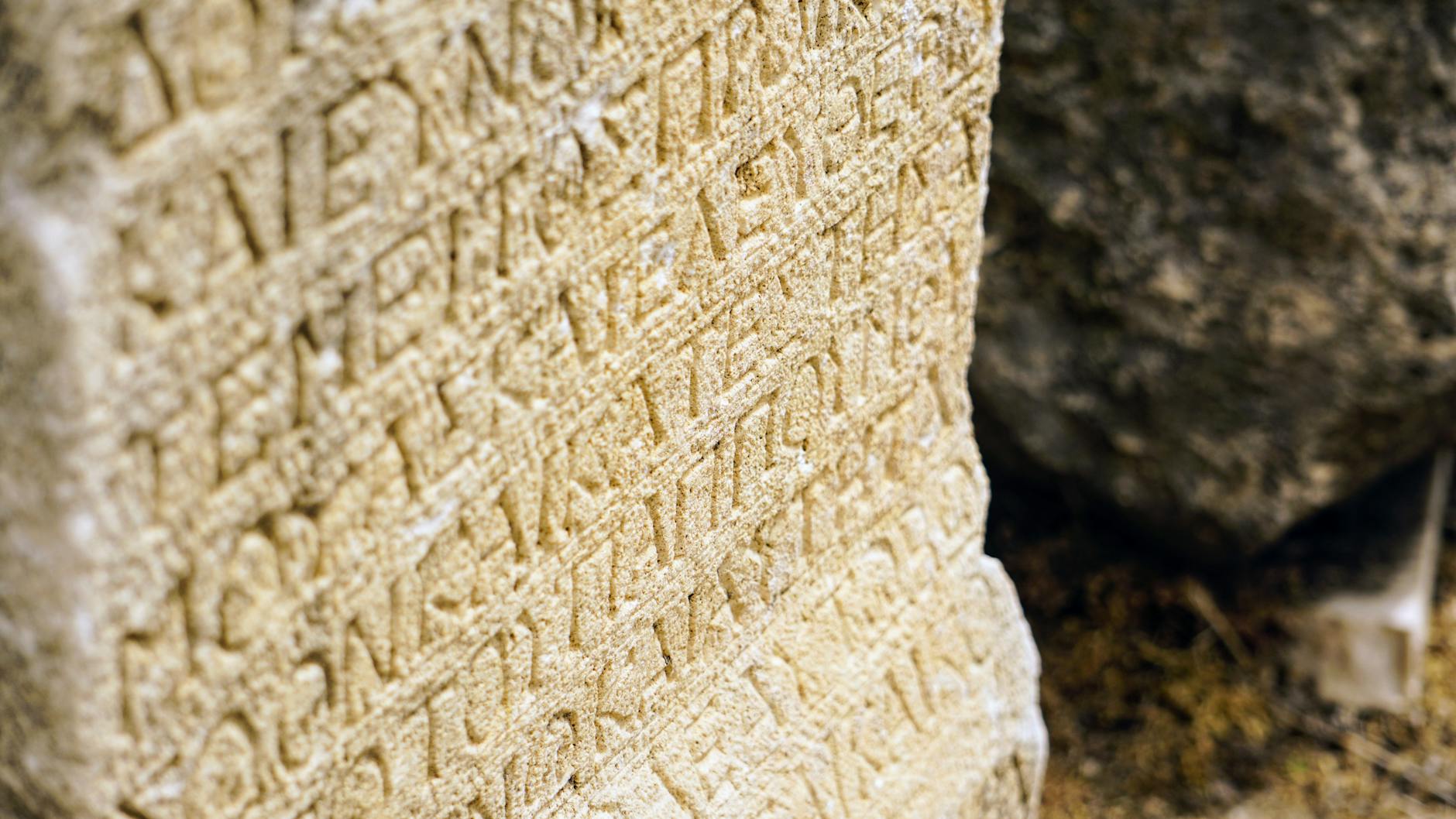
Approximately 3,800 years earlier, a Sumerian schoolteacher pressed a stylus into wet clay and recorded his frustration that students no longer respected their instructors or honored the wisdom of their elders.
The specific medium of corruption has changed. The psychological structure of the complaint has not moved a millimeter.
A Catalog of Catastrophes That Never Arrived
The historical record on generational anxiety is so consistent that it begins to read less like a series of independent moral panics and more like a single, unbroken one. The names and technologies change. The underlying script does not.
Socrates, in Plato's dialogues, is attributed with the observation that Athenian youth had become disrespectful, tyrannical toward their parents, and contemptuous of authority. Whether or not Socrates said precisely this, the sentiment was clearly circulating in Athens in the 4th century BC. It was circulating in Rome as well — Cicero, Horace, and Livy all produced versions of the complaint that Roman youth had grown soft, pleasure-seeking, and indifferent to the virtues of their ancestors.
The printing press arrived in Europe in the 15th century and immediately generated anxiety about what young people might read unsupervised. The novel — the novel as a form — was regarded with deep suspicion in the 18th century as a corrupting influence on impressionable minds, particularly young women. The concern was not incidental. It was organized, persistent, and backed by prominent intellectuals.
The 19th century produced Penny Dreadfuls, cheap serialized fiction sold to working-class readers that respectable society viewed as a gateway to moral ruin. Then came jazz. Then came radio. Then came film, television, rock and roll, heavy metal, video games, the internet, social media, and now — with remarkable predictability — the smartphone and algorithmic content feeds.
At no point in this sequence did the feared catastrophe arrive. The generation raised on dime novels did not collapse. The generation raised on television produced the internet. This track record has done essentially nothing to diminish the confidence with which each new version of the alarm is raised.
The Psychology Underneath the Pattern
It would be easy to conclude from this history that the critics are simply wrong — reflexively, generationally wrong — and that the appropriate response to any new moral panic about youth is patient dismissal. That conclusion is too tidy, and this article is not making it.
Some concerns about the effects of new media and technologies on development are legitimate and empirically supported. The question is not whether any individual iteration of the complaint might be correct. The question is why the complaint reproduces itself with such consistency regardless of whether the evidence supports it, and what that consistency reveals about the adults doing the complaining.
The most compelling framework draws on what social psychologists call status threat and symbolic continuity. Adults do not merely observe young people behaving differently — they interpret behavioral difference as a referendum on the choices the adults themselves made. If the younger generation has abandoned the music, the manners, the reading habits, or the values that the older generation organized its identity around, that abandonment carries an implicit message: what you valued was not worth keeping.
This is not a comfortable thing to absorb. It is much more comfortable to reframe the abandonment as corruption — to locate the problem in whatever external influence the young people have been exposed to, rather than in the possibility that cultural values are simply evolving.
The Status Threat That Writing Itself Created
There is an additional layer worth examining. The Sumerian tablet is not merely evidence that the complaint is old. It is evidence that the complaint appeared at the very moment when intergenerational knowledge transfer became formalized. Writing created, for the first time, a mechanism by which accumulated wisdom could be preserved and transmitted with precision. It also created, for the first time, a class of people — scribes, teachers, scholars — whose status depended on younger generations receiving that accumulated wisdom with appropriate deference.
The moment you have a formal system for transmitting knowledge across generations, you have a class of people with a vested interest in younger people taking that transmission seriously. The 'kids these days' complaint may be, at its root, less about the young people and more about the anxiety of the transmitters — the adults who have built their identity and authority around being the custodians of what matters, watching the next generation demonstrate that it might not matter as much as advertised.
This dynamic has not changed because the underlying social structure that produces it has not changed. There are still adults whose authority rests on the presumption that their accumulated experience is valuable. There are still young people who are, as young people have always been, in the process of deciding which parts of that experience to adopt and which to discard. The tension between those two groups is not a modern pathology. It is a feature of how cultures update themselves.
What the Consistency Actually Tells Us
The four-thousand-year run of this particular complaint is, in the end, a piece of data about adult psychology rather than about youth behavior. The fact that the alarm has been raised in every society, across every technology, with nearly identical emotional content, suggests that the trigger is not the specific behavior of the young people in question. The trigger is generational change itself — the visceral, status-laden experience of watching the world reorganize around values and practices that are not yours.
This does not mean every specific concern is unfounded. It means that the emotional intensity with which the concern is felt is not a reliable indicator of whether it is grounded in evidence. The Sumerian teacher was genuinely distressed. So was Fredric Wertham. So are the researchers and parents currently debating the effects of TikTok on adolescent attention spans. Genuine distress and accurate diagnosis are not the same thing.
The most useful thing the historical record offers here is not reassurance. It is calibration. Before treating the current version of the oldest panic in the world as uniquely urgent, it is worth asking what is different this time — and being honest about how many times that question has been asked before, with the same certainty, and the same answer.