The Immortal Face: How Power Has Always Demanded Perfect Pictures
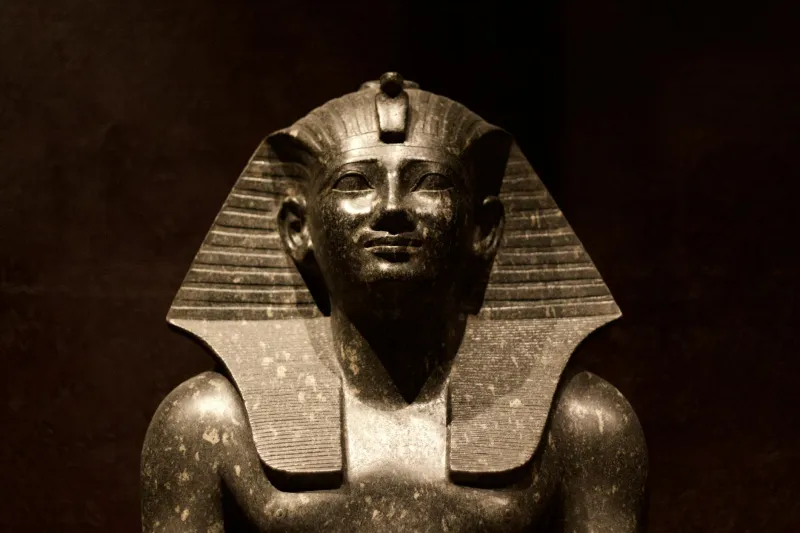
The Pharaoh's Forever Face
When archaeologists uncovered the tomb of Tutankhamun in 1922, they found something curious. The golden death mask bore little resemblance to the mummy beneath it. CT scans would later reveal a young man with a pronounced overbite, a slightly cleft palate, and the physical markers of genetic disorders common to Egypt's inbred royal line. Yet the mask presented a face of divine perfection—symmetrical features, unblemished skin, and the serene confidence of a god-king.
This was no accident. Egyptian artisans worked from strict guidelines that prioritized idealized representation over realistic portraiture. The pharaoh's image, whether carved in stone or cast in gold, served as propaganda for both the living and the dead. Subjects needed to see their ruler as the physical embodiment of divine authority, not as the frail human he might actually be.
Five thousand years later, we are still crafting the same lies.
The Roman Formula for Eternal Youth
Roman emperors perfected the art of visual manipulation on an industrial scale. Augustus Caesar, who ruled for forty-five years until his death at seventy-five, appears remarkably consistent across thousands of statues, coins, and frescoes scattered throughout the empire. In every representation, he maintains the face of a man in his thirties—strong jaw, full head of hair, and the lean physique of a military commander.
This wasn't artistic laziness. Roman sculptors possessed extraordinary technical skill, capable of rendering wrinkles, scars, and age spots with photographic precision. Instead, they followed the prima porta tradition, which demanded that imperial portraits show the ruler at the peak of his physical and intellectual powers. Citizens across the empire, from Britain to North Africa, needed to recognize their emperor instantly. More importantly, they needed to believe in his continued vitality.
The psychological principle at work transcends culture and technology. Leadership, particularly in times of uncertainty, requires followers to project strength onto their leaders. A ruler who appears weak, old, or physically compromised triggers primitive anxieties about the group's survival prospects. The image becomes more important than the person.
Medieval Manuscripts and Manufactured Majesty
Medieval illuminated manuscripts reveal the same pattern operating under different constraints. Kings and queens appear in religious texts and historical chronicles with faces that follow artistic convention rather than biological reality. Features are standardized—large eyes, small mouths, pale skin untouched by disease or hardship.
The Book of Kells, created by Irish monks around 800 CE, depicts various biblical and royal figures with nearly identical facial structures. This wasn't artistic limitation but psychological necessity. In an age when most subjects would never see their ruler in person, the illustrated image carried enormous power. It had to convey authority, legitimacy, and divine favor through visual shorthand that transcended literacy.
Chroniclers of the time understood this implicitly. When they described rulers in text, they employed similar techniques—emphasizing strength, beauty, and moral character while omitting physical flaws or signs of aging. The written word and visual image worked together to construct an idealized version of leadership that served political rather than documentary purposes.
The Camera's Honest Lie
Photography promised to end this tradition of visual manipulation. Early cameras captured reality with mechanical precision, seemingly immune to the artistic liberties taken by painters and sculptors. Yet within decades, political leaders had learned to bend this new medium to their will.
Joseph Stalin employed teams of photo retouchers who could make enemies disappear from historical images and remove the pockmarks that scarred his face from childhood smallpox. His official portraits showed a man with smooth skin, perfect teeth, and the confident bearing of revolutionary leadership. The technology had changed, but the underlying psychology remained identical to that of Egyptian tomb painters.
Franklin Roosevelt, paralyzed from the waist down by polio, collaborated with photographers to maintain the illusion of physical strength throughout his presidency. Images showed him seated behind desks, standing with the aid of hidden braces, or photographed from angles that concealed his wheelchair. The American public, facing the Great Depression and World War II, needed to believe in their leader's personal resilience as a symbol of national strength.
The Instagram Presidency
Social media has democratized the tools of image manipulation while intensifying the pressure for visual perfection. Modern political leaders curate their online presence with the same calculated precision once reserved for official portraits. Every photograph is staged, filtered, and optimized for maximum psychological impact.
The technology has evolved from chisels and paintbrushes to Photoshop and professional lighting, but the fundamental human need remains unchanged. Followers require leaders who appear stronger, younger, and more confident than ordinary mortals. The medium adapts to available technology, but the message stays consistent across millennia.
The Survival Strategy Behind the Smile
This pattern persists because it serves a crucial evolutionary function. Human groups have always needed to believe in their leaders' competence, particularly during times of crisis or competition with rival groups. A leader who appears physically or mentally compromised triggers anxiety about the group's survival prospects.
The manipulation is not primarily about vanity—it's about maintaining the psychological contract between leaders and followers. Citizens invest their trust, resources, and sometimes their lives in political leaders. In return, they need symbols of strength and competence that justify this investment.
Every selfie-editing app on your phone descends from the same impulse that drove Egyptian artisans to perfect Tutankhamun's golden mask. The technology changes, but the psychology remains constant. We are still the same species that needed to believe our leaders could protect us from lions, rival tribes, and uncertain harvests.
The only difference is that now we carry the tools of royal image-making in our pockets, available to anyone who needs others to believe in them.