The Ladder That Never Ends: How Rome's Career Track Became the Blueprint for Professional Burnout
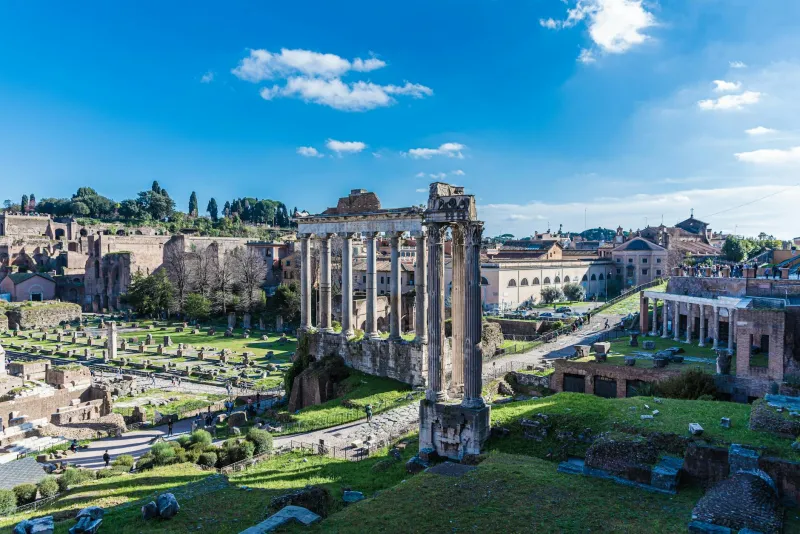
The Original Hustle Culture
Long before anyone coined the term "work-life balance," ambitious Romans were systematically destroying their health, finances, and family relationships in pursuit of something called the cursus honorum — the "course of offices." This wasn't just a career path; it was a precisely engineered psychological trap that turned the human drive for status into a machine for extracting labor from the elite.
The cursus honorum required aspiring politicians to climb a specific ladder: quaestor at thirty, praetor at thirty-nine, consul at forty-two. Each rung demanded years of unpaid public service, massive personal expenditures on games and festivals, and the kind of networking that modern professionals would recognize as a full-time job in itself. The system was designed with a cruel efficiency: it offered just enough genuine prestige to keep participants committed while ensuring that most would exhaust themselves before reaching the top.
The Psychology of the Next Rung
What made the Roman system particularly insidious was its exploitation of a fundamental quirk in human psychology: our inability to accurately predict when we'll have "enough" status. Modern behavioral research confirms what Roman architects of ambition understood intuitively — people consistently underestimate how much achievement they'll need to feel satisfied, a phenomenon psychologists call "impact bias."
Roman memoirs reveal the same pattern we see in contemporary studies of high achievers. Pliny the Younger wrote extensively about his exhaustion and health problems while pursuing higher office, yet he never seriously considered stepping off the track. Each position felt like it would be the one to finally provide the security and recognition he craved. The consulship would surely be enough. Then came the proconsulships, the special commissions, the honorary positions that stretched into old age.
 Photo: Pliny the Younger, via onejourney.net
This wasn't accidental. Roman political culture deliberately structured advancement to exploit what modern research calls "hedonic adaptation" — our tendency to quickly adjust to new levels of achievement and begin craving the next increment. The system needed ambitious people to work themselves to death for public benefit, so it created a ladder where satisfaction was always one rung away.
The Global Franchise
Rome didn't invent this psychological exploitation, but it perfected the template that every subsequent high-performance society has copied. Tang Dynasty China's imperial examination system created similar dynamics among scholar-bureaucrats, demanding decades of study and political maneuvering for positions that required constant vigilance to maintain. Medieval Islamic courts developed elaborate hierarchies of administrative offices that consumed the lives of ambitious families across generations.
The pattern persists because it works. Modern consulting firms, law partnerships, and academic tenure tracks operate on the same fundamental insight: if you can convince talented people that the next level will finally provide the recognition they seek, they'll voluntarily submit to extraordinary demands on their time, health, and relationships.
The American Iteration
Contemporary American professional culture has refined the Roman model with unprecedented sophistication. The modern cursus honorum runs from unpaid internships through associate positions, senior roles, partnerships, and C-suite appointments. Each transition requires the same total commitment that Roman magistrates once demonstrated through public games and military service.
Silicon Valley has perhaps perfected the art of status-driven labor extraction. The promise of equity, the mythology of disruption, and the carefully curated culture of overwork create conditions where talented people compete to sacrifice their personal lives for the possibility of joining an elite that, like Roman senators, defines itself primarily through exclusivity and the visible suffering required to join.
The Engineering of Exhaustion
What historical analysis reveals is that burnout isn't a modern malfunction or an unintended consequence of competitive systems. It's a deliberately engineered feature that every high-performance society has used to extract maximum effort from its most capable members. The exhaustion is the point.
Roman political culture needed people to spend fortunes on public entertainment, dedicate decades to unpaid service, and prioritize state business over personal welfare. Modern corporate culture needs people to work eighty-hour weeks, relocate for company needs, and maintain constant availability. Both systems achieve these goals by exploiting the same psychological vulnerability: our belief that the next achievement will finally be enough.
Breaking the Ancient Code
Understanding the historical pattern offers some protection against its psychological pull. When Roman authors like Tacitus wrote critically about the cursus honorum, they noted that the most successful opt-outs were people who had achieved enough status to recognize the system's fundamental dishonesty about satisfaction and security.
Modern research supports this observation. People who successfully resist the pressure of endless advancement typically do so by developing what psychologists call "intrinsic motivation" — satisfaction derived from the work itself rather than its external rewards. This requires the kind of self-awareness that only comes from understanding how the ladder was designed to function.
The Romans built their system to last, and it has. Five thousand years later, we're still climbing the same psychological structure, just with different titles and slightly better health insurance. The first step to getting off the ladder is recognizing that it was always designed to keep you climbing.