Delay Is a Weapon: How Rome's Senate Mastered the Art of Talking Bills to Death
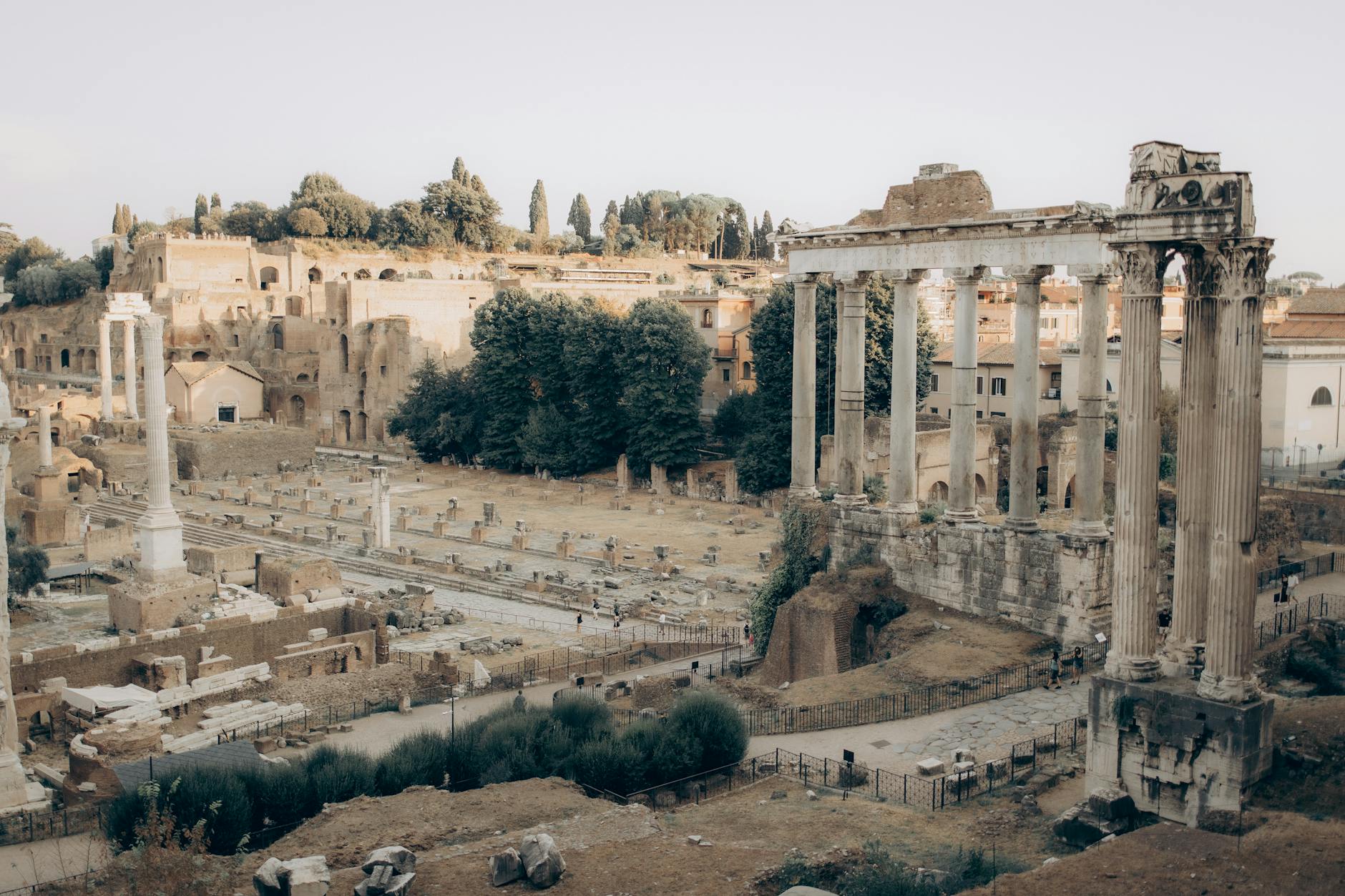
Delay Is a Weapon: How Rome's Senate Mastered the Art of Talking Bills to Death
In August of 1957, Senator Strom Thurmond of South Carolina stood on the floor of the United States Senate and spoke for twenty-four hours and eighteen minutes without stopping. He read from state election laws, the Declaration of Independence, and, reportedly, a phone book. His goal was not to persuade anyone. It was to exhaust the clock and prevent a civil rights bill from coming to a vote. He failed, ultimately, but the performance lodged itself in American political memory as a symbol of institutional absurdity.
It was not, however, original.
More than two thousand years earlier, in the waning decades of the Roman Republic, senators were deploying functionally identical tactics against legislation they lacked the votes to defeat outright. The mechanisms differed in their particulars. The psychological logic was the same down to the bone.
The Roman Toolkit for Killing a Bill Without Voting
The Roman Senate operated under a set of procedural norms — not always codified, often contested — that a determined minority could exploit with considerable creativity. Among the most effective was diem consumere: the deliberate consumption of the day. Senate sessions could only be held during daylight hours, and any business left unresolved at sundown died with the session. A senator who wanted to kill a bill without leaving fingerprints on the vote simply had to speak long enough, slowly enough, and on enough tangential subjects to run the sun into the horizon.
Cato the Younger elevated this technique to something approaching an art form. During the late Republic, Cato used extended, uninterrupted speech — the Romans had no formal rule requiring a speaker to yield the floor — to prevent Julius Caesar from receiving a military command, to obstruct land reform measures backed by the popular assemblies, and to delay financial legislation he found politically inconvenient. Ancient sources describe him speaking until senators physically left the building in frustration or until magistrates, at their wit's end, had him temporarily removed.
Beyond marathon oratory, Roman senators manipulated quorum requirements, challenged the religious validity of legislative days (obnuntiatio, the announcement of unfavorable omens, could legally suspend public business), and used procedural motions to force repeated recounts and re-deliberations on settled questions. The tribune Publius Clodius and his opponents traded these maneuvers back and forth in the 50s BC like opposing lawyers filing motions purely to delay a trial.
The Constant Underneath the Tactic
What connects Cato's floor speeches to Thurmond's phone-book recitation is not institutional design. Rome and the United States built their legislative bodies on different foundations, with different rules, different terms of service, and different relationships between elected officials and the public. The connection is psychological, and it is remarkably stable across the millennia separating them.
When a political faction cannot win on the merits of a direct vote, it faces a binary choice: accept the loss or contest the process. Accepting the loss is psychologically costly in ways that behavioral research consistently confirms. It signals weakness to allies, emboldens opponents, and forecloses the possibility of a different outcome. Contesting the process, by contrast, preserves optionality. A bill delayed is not a bill passed. A session exhausted is not a vote recorded. The faction lives to fight another day, and its members can return to their constituents with something other than a clean defeat.
This calculus does not require cynicism or bad faith, though it is compatible with both. It requires only that political actors behave like political actors — which is to say, like humans under competitive pressure. The five-thousand-year behavioral record strongly suggests they will.
From the Forum to the Senate Chamber
The American filibuster, in its modern form, is a creature of the nineteenth century. The Senate's original rules did not protect unlimited debate; the protection evolved gradually, was codified by accident in 1806 when the Senate dropped a rule allowing debate to be cut off, and became a genuinely powerful tool only as the chamber developed the norm of requiring a supermajority to end discussion. What began as an oversight became a structural feature, and what became a structural feature became a strategic resource.
The pattern of use tracks almost perfectly with what Roman precedent would predict. The filibuster is deployed most aggressively not when the minority is philosophically opposed to all legislation, but when it is losing. Historians of the Senate note that the tactic surged during Reconstruction, when Southern Democrats used it to obstruct civil rights legislation they could not defeat through normal voting. It surged again in the mid-twentieth century for identical reasons. In the contemporary Senate, its use has expanded dramatically as partisan margins have narrowed and the cost of any single legislative loss has risen in the eyes of each party's base.
The Romans would have found none of this surprising. The late Republic's procedural chaos intensified precisely as the political stakes rose — as land reform, military commands, and eventually the structure of the state itself became the objects of legislative contest. When the consequences of losing a vote feel existential, the incentive to prevent the vote from happening at all becomes overwhelming.
What This Means for Reform Debates
Contemporary arguments about filibuster reform tend to be framed as debates about institutional design: whether the Senate should require a simple majority or a supermajority to proceed, whether talking filibusters should be reinstated, whether the rule serves democratic values. These are legitimate questions. But they are incomplete without the behavioral layer.
Any reform that removes one procedural tool for minority obstruction will, if the underlying psychological incentive remains, produce pressure to develop another. Rome's Senate, when deprived of one avenue for delay, found others. The obnuntiatio procedure — invoking religious omens to suspend business — was not originally a political weapon; it became one when sufficiently motivated actors decided it could be. American legislative history offers comparable examples: the motion to adjourn, the quorum call, the amendment tree, the hold on executive nominations. Each has served, at various moments, as a functional substitute for whatever obstruction mechanism was most recently constrained.
This is not an argument for fatalism or against reform. It is an argument for realism. Procedural obstruction by losing factions is not a bug introduced into otherwise healthy institutions by bad actors. It is a behavioral constant that institutional design can shape, channel, and constrain, but is unlikely to eliminate. The Roman Republic eventually resolved its procedural deadlock — through the collapse of republican government entirely, which is not a model anyone should find encouraging.
The more productive question may not be how to abolish delay as a tactic, but how to structure institutions so that delay carries enough cost to the delaying party that it is used sparingly rather than reflexively. The Romans never quite solved that problem. The jury is still out on whether we will.