Standing in the Wreckage: The Enduring Political Theater of the Disaster Visit

Photo by Photo by Miguel Domingo on Unsplash on Unsplash
In September 2005, a photograph of President George W. Bush looking down at the flooded ruins of New Orleans from the window of Air Force One became one of the defining images of his presidency. He had not yet landed. He had not yet walked through the wreckage. He was surveying it from altitude, and the distance — physical, emotional, political — was immediately legible to everyone who saw the image.
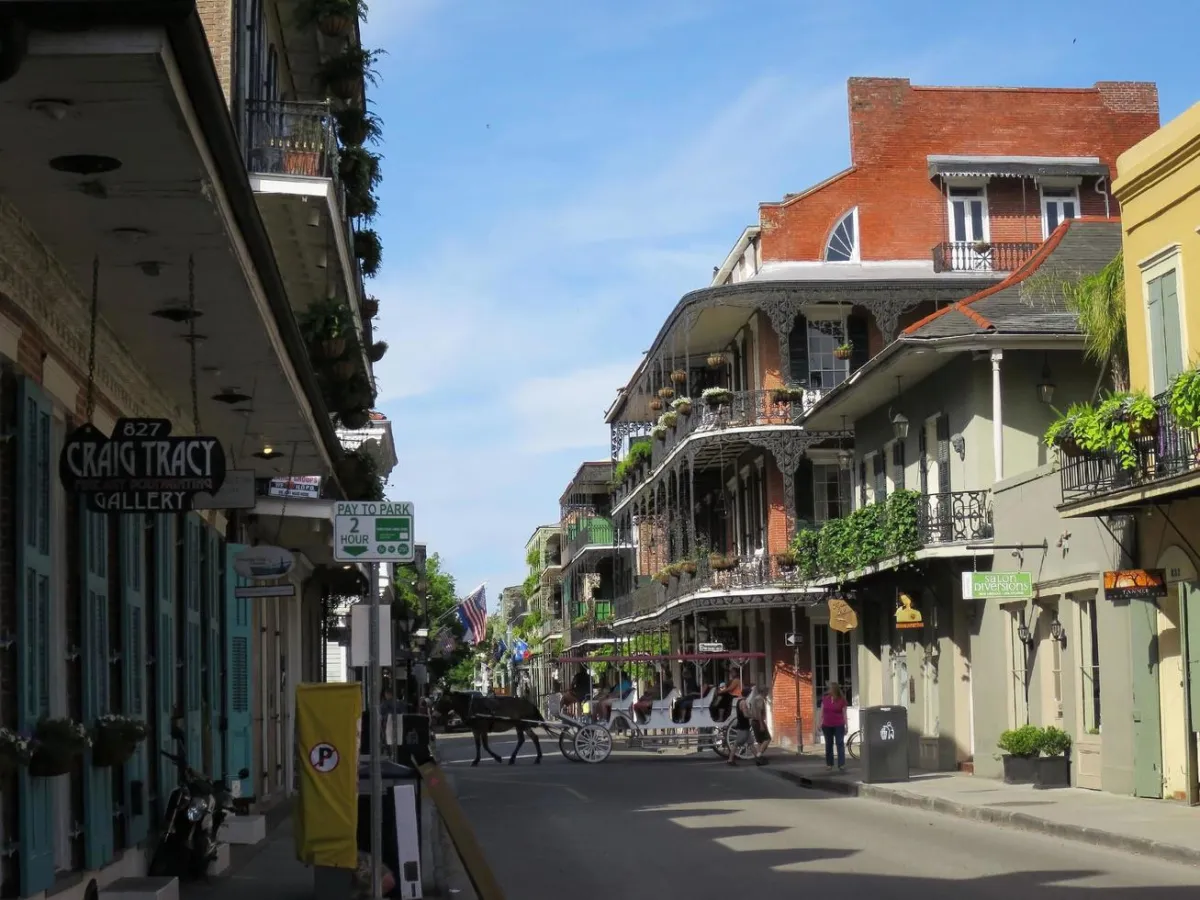 Photo: New Orleans, via static.vecteezy.com
The lesson drawn from that photograph, in the years that followed, was almost entirely about optics: presidents must visit disaster zones promptly, must be seen on the ground, must be photographed among survivors. Political consultants absorbed this lesson. Subsequent administrations absorbed it. The post-disaster site visit became, if anything, more scripted and more rapid.
Almost no one asked the more interesting question: why does the visit matter at all? What psychological work does it perform? And why has it been performing that work, in recognizably similar form, for the entirety of recorded human history?
Nero and the Problem of the Visible Leader
The Great Fire of Rome in 64 CE burned for six days and destroyed a significant portion of the city. The ancient sources — Tacitus most prominently — are careful to record what Nero did and did not do during and after the fire. He opened his palaces to displaced citizens. He organized food distribution. He supervised the rebuilding plan personally. He also, according to Tacitus, appeared among the ruins in a manner that the historian describes with characteristic ambiguity: the emperor's presence was noted, his expressions of concern were recorded, and the political benefit of his visibility was understood by all parties.
The rumor that Nero had started the fire himself — almost certainly false — spread anyway, and Tacitus connects it explicitly to the public's awareness that the emperor had been seen in the ruins in a way that seemed, to some observers, more performative than grieving. The ancient Romans were not naive about the politics of disaster presence. They understood that a leader appearing in wreckage was doing something beyond simply appearing.
What they also understood, and what the historical record confirms, is that the alternative — the leader who did not appear — was always worse. Roman emperors who failed to show themselves during urban crises faced accusations not merely of indifference but of something closer to supernatural abandonment. The leader's physical presence in a disaster zone was understood as a form of ritual acknowledgment: the state had seen what had happened and had not looked away.
Medieval Kings and the Plague Village
The visitation logic became considerably more complex during epidemic disasters, for an obvious reason: appearing among the afflicted carried genuine mortal risk. Medieval European kings navigated this tension in ways that reveal the competing pressures with unusual clarity.
Edward III of England, during the Black Death of 1348 to 1349, largely avoided plague-stricken areas — a pragmatic decision that was also politically costly. His absence from the worst-affected communities contributed to a broader sense that royal authority had retreated precisely when it was most needed. The chroniclers of the period are full of complaints about lords and officials who fled to their country estates while commoners died in the streets.
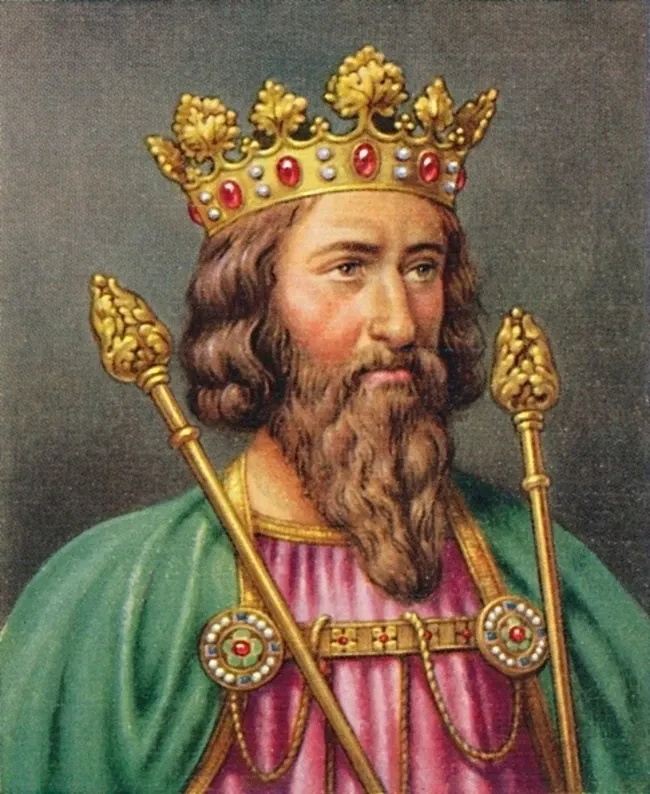 Photo: Edward III of England, via static.wikia.nocookie.net
The leaders who did appear — or who were recorded as appearing, which in the medieval context amounts to much the same thing — received a different treatment in the historical record. Bishops who remained in plague cities, nobles who organized relief efforts without retreating, were commemorated with a specificity that suggests the appearance itself was understood as a meaningful act, independent of whatever practical effect it had. The practical effect, in most cases, was minimal. The symbolic effect was apparently considerable.
This distinction — between practical effect and symbolic function — is the key to understanding why the disaster visit has persisted across political systems that otherwise have very little in common.
The Helicopter and the Photo Opportunity
The modern American presidential disaster visit has developed a ritual grammar that is now essentially formalized. The president arrives within a defined window after the catastrophe — the acceptable delay has shortened considerably over the past several decades. He is photographed in shirtsleeves, without a tie, to signal engaged informality. He embraces survivors. He is briefed by officials in front of cameras. He makes promises about federal resources. He leaves.
The resources may or may not follow. The rebuilding may take years or decades. The specific promises made during the visit are frequently not kept in the form in which they were offered. None of this diminishes the political importance of the visit itself, because the visit is not primarily a policy instrument. It is a grief ritual.
This is the insight that most political analysis of disaster theater misses by focusing too heavily on the cynicism of the performance. Yes, the visit is staged. Yes, the photo opportunities are arranged. Yes, the emotional expressions are at least partially managed. All of this is true, and none of it explains why the ritual works — why voters who intellectually understand that a presidential flyover changes nothing nevertheless feel its absence as a genuine wound.
The answer lies in something that behavioral research on collective trauma has documented with some consistency: groups that have experienced shared catastrophe require acknowledgment from authority figures before they can begin the psychological work of recovery. The acknowledgment does not need to be sincere in any deep sense. It needs to be present, visible, and physically proximate to the damage. A statement issued from Washington does not perform the same function as a body standing in the ruins, because the body standing in the ruins is doing something that statements cannot do: it is confirming, through physical presence, that the catastrophe is real and that it has been witnessed by the entity responsible for the community's welfare.
Why the Ritual Survives Its Own Exposure
Perhaps the most striking feature of the disaster visit as a political institution is its resilience to demystification. Americans are, at this point, thoroughly aware that presidential disaster tours are choreographed. The behind-the-scenes logistics — the advance teams, the camera positions, the carefully selected survivors for the embrace — have been reported on extensively. This awareness has not meaningfully diminished either the political cost of a failed visit or the political benefit of a successful one.
This is consistent with what the historical record shows about ritual in general: knowing that a ceremony is a ceremony does not neutralize its psychological effect. Roman citizens understood that imperial appearances in disaster zones were politically motivated. Medieval communities understood that a bishop's presence in a plague village was partly about the bishop's reputation for sanctity. They required the appearance anyway.
The human need that the disaster visit addresses is not a need for information. It is not a need for policy. It is a need for witnessed acknowledgment — the confirmation, delivered in person by the figure who represents collective authority, that the community's suffering has registered at the level of power. Satisfying that need through a performance does not make the satisfaction less real. It makes the performance load-bearing.
Five thousand years of leaders standing in wreckage they could have prevented suggests that this particular ritual is not going anywhere. The helicopter may be replaced by a drone feed. The photograph may be replaced by something we have not yet invented. The need it serves will remain exactly where it has always been.