Locked In: The Five-Thousand-Year Politics of Keeping Wages Still
In 2009, the federal minimum wage reached $7.25 an hour and stopped. In the years since, the price of eggs, rent, health insurance, and a gallon of gasoline have all moved — some dramatically — while that number has remained perfectly, almost defiantly, inert. Commentators describe this as a political failure, a legislative gridlock problem, a consequence of partisan polarization. All of those explanations are probably true. None of them are new.
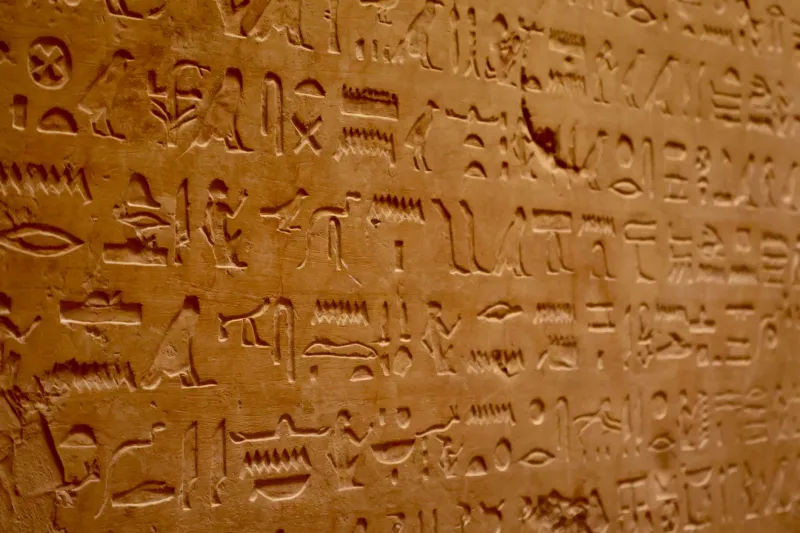
Hammurabi's legal code, inscribed on a basalt stele around 1750 BC and now housed in the Louvre, contains some of the earliest surviving wage regulations in human history. Laborers, ox-drivers, and skilled craftsmen all had their daily compensation fixed by royal decree. The stated rationale was order and fairness. The practical effect was that wages became a matter of official policy rather than negotiation — and official policy, then as now, changes far more slowly than markets.
The stele is famous. Less famous is what happened when Babylonian prices rose anyway.
The Asymmetry That Never Changes
Every economy that has ever existed has contained the same structural asymmetry: the prices of goods and services adjust continuously, responding to harvests, wars, trade disruptions, and speculation, while wages are treated as a separate category — one that requires deliberate institutional action to change, rather than simply reflecting conditions. This asymmetry is not accidental. It is, the historical record suggests, a feature rather than a bug.
Medieval European guild systems offer an instructive example. Guilds set pay scales for journeymen and apprentices through collective agreement among master craftsmen — the same masters who employed those journeymen. The scales were revised, but rarely upward without significant pressure, and the process of revision was controlled entirely by the people who benefited from keeping costs low. When the Black Death killed roughly a third of Europe's working population in the mid-fourteenth century, the resulting labor scarcity created enormous upward pressure on wages. The English Crown responded in 1351 with the Statute of Laborers, which legally prohibited workers from demanding more than pre-plague wages. The logic was framed in terms of social stability. The effect was to use state authority to protect employer margins at the precise moment when market forces would have dramatically improved worker bargaining power.
The psychological mechanism at work here has been documented repeatedly in behavioral economics research. Employers consistently treat wage increases as permanent losses — a form of downward nominal wage rigidity that researchers have confirmed across multiple countries and time periods. A worker's salary, once set, becomes a reference point from which any reduction feels like a punishment. Employers internalize this dynamic and respond by avoiding increases wherever possible, since increases reset the reference point upward and create future resistance to any reversal. The result is a ratchet that moves easily in one direction and resists movement in the other.
Hammurabi's administrators did not have access to prospect theory. They arrived at the same structural arrangement anyway.
The Language of Catastrophe
One of the most consistent features of wage debates across five millennia is the rhetorical framing used by those opposing increases. The language is almost always apocalyptic. Wage increases will destroy the trade. They will make craftsmen uncompetitive with foreign producers. They will cause unemployment by making labor too expensive to hire. They will collapse the enterprise entirely.
This framing appears in Roman debates over payments to urban workers, in colonial American arguments against raising indentured servant compensation, in nineteenth-century industrial testimony before Parliament, and in every congressional hearing on the minimum wage since the Fair Labor Standards Act established the concept in 1938. The specifics change. The structure of the argument does not.
What makes this pattern psychologically interesting is not that the argument is always made in bad faith — sometimes the economic concerns are genuine — but that it is made with identical emotional intensity regardless of the actual magnitude of the proposed increase. A 3 percent adjustment and a 30 percent adjustment both tend to generate the same vocabulary of existential threat. The behavioral literature on loss aversion helps explain this: when people are asked to evaluate losses, the emotional response is largely insensitive to scale within a broad range. A wage increase registers as a threat. The size of the threat is almost secondary.
What the Freeze Actually Reveals
The political economy of wage stagnation is, at its core, a story about who controls the timing of adjustments. In every historical system where wages have been regulated — Babylonian royal decree, guild agreement, statutory minimum — the party with institutional authority over the adjustment mechanism has reliably used that authority to slow the pace of change. This is not a conspiracy. It is the predictable behavior of any agent who benefits from the status quo and controls the process for changing it.
Roman Emperor Diocletian issued his Edict on Maximum Prices in 301 AD, a sweeping attempt to control inflation by capping the prices of hundreds of goods and services, including wages for dozens of occupations. Historians generally agree that the edict was largely unenforceable and widely ignored in practice. Prices found ways around it. Wages, however — already lower than Diocletian's caps in many regions — stayed low. The ceiling did not lift them. It only prevented the market from lifting them further.
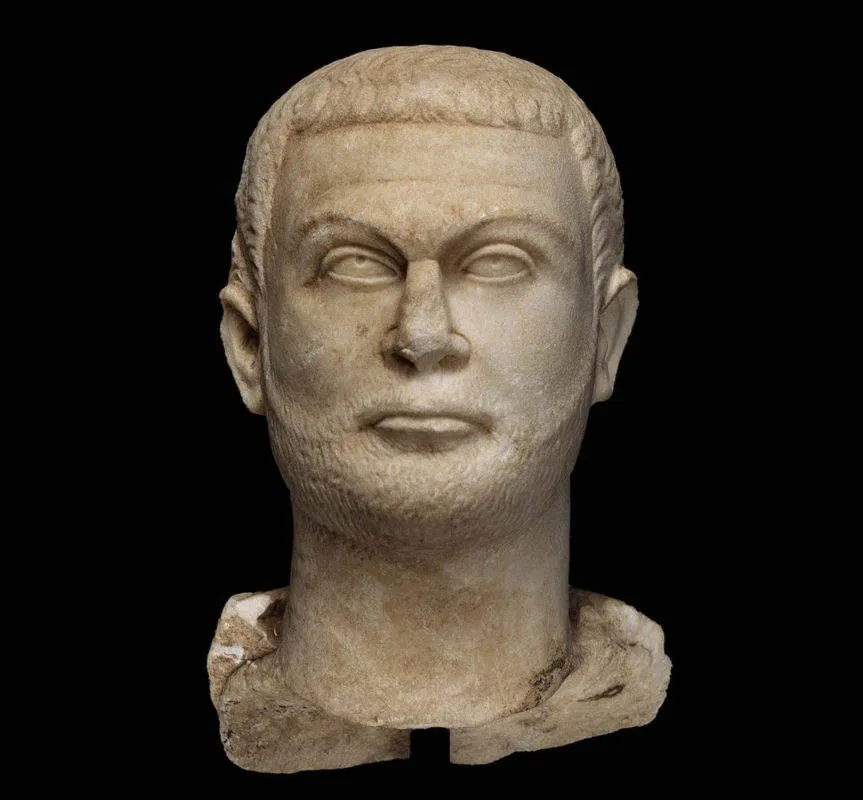 Photo: Roman Emperor Diocletian, via cdn.thecollector.com
The modern American minimum wage functions in a structurally similar way. It establishes a floor, not an escalator. Keeping it in place requires no action. Raising it requires legislation. The asymmetry of effort required to maintain the status quo versus change it ensures that inertia favors stagnation.
The Psychology of the Paycheck
For workers, the frozen wage creates a specific and well-documented psychological experience: the sensation of falling while standing still. When compensation remains fixed and costs rise, the lived experience is one of continuous loss — even though nothing has been actively taken away. This is the cruelest form of the reference-point problem. The nominal number stays the same. The real value erodes. And because no single moment of reduction occurs, the process generates diffuse frustration rather than focused grievance, which is precisely the condition least likely to produce organized resistance.
This dynamic, too, has historical precedent. Medieval peasants whose rents were fixed in nominal terms while agricultural prices fluctuated experienced identical patterns: years of relative comfort when grain prices were high, years of quiet desperation when they fell, and throughout it all, a structural inability to point to any single moment of injustice. The system simply was what it was.
Five thousand years of evidence suggests that this is not a coincidence. Compensation systems that require deliberate action to update will always update more slowly than the conditions they are meant to reflect. That is not a flaw in the design. In most cases, it appears to have been the point.


